250,000 people join Mayday rally for food supplies
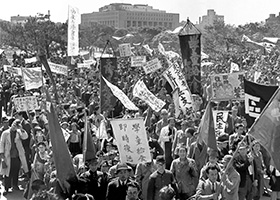
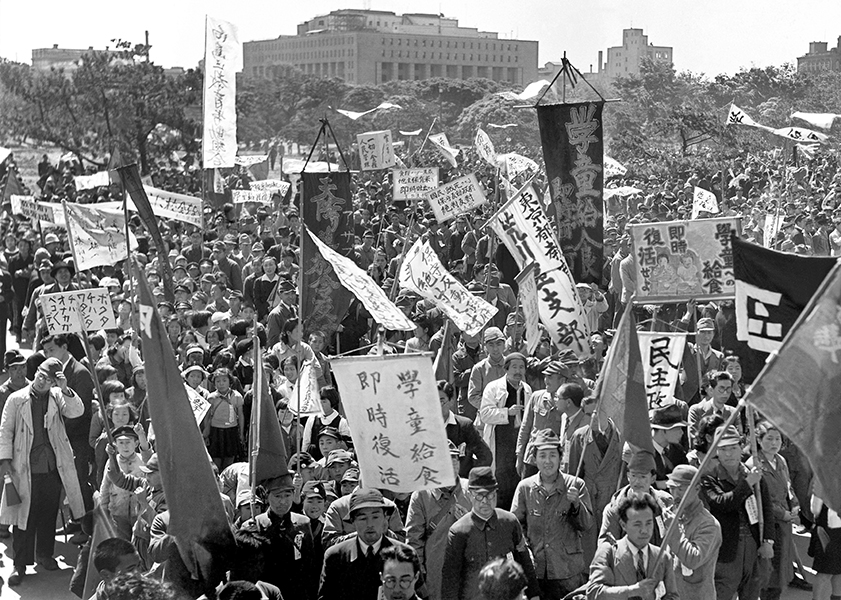
Amid a worsening food crisis, 250,000 people attend a “Mayday for food supplies” rally outside the Imperial Palace, May 19, 1946. Children can be seen behind placards bearing the words onaka ga pekopeko desu (“I am hungry”). At the center rear is the building “Daiichi Seimei Kan”, which was commandeered as the Allied General Headquarters (GHQ).
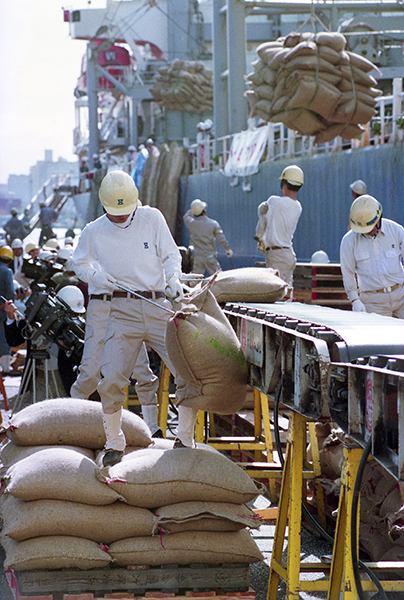
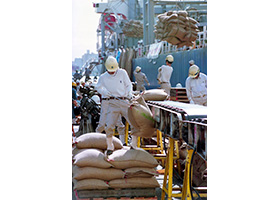
The second shipment of emergency rice imports arriving by cargo ship from Thailand is unloaded at the Port of Kobe, November 19, 1993. Due to a poor Japanese harvest, a total of 2.545 million tons of rice was imported by August 1994 from China, Thailand, the United States and Australia. This represented a quarter of Japan’s annual total consumption of around 10 million tons.
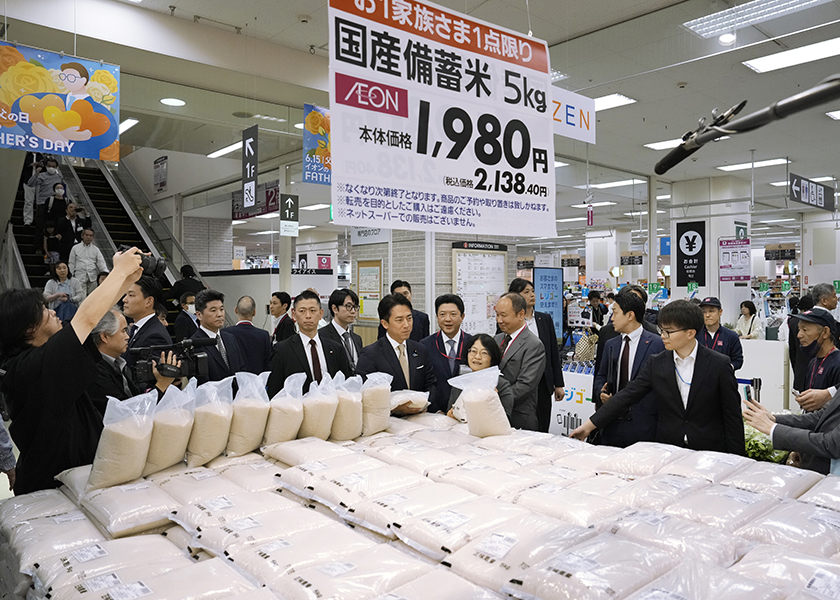
Minister of Agriculture visits supermarket selling stockpiled rice
Shinjiro Koizumi, Minister of Agriculture, Forestry and Fisheries (center), drops by the rice section of a Tokyo supermarket which has launched sales of discounted rice from the government stockpile. The rice shortage was caused by low volumes reaching the market in 2023 after a summer of excessive heat. In the summer of 2024, people started hoarding rice in case of disaster in response to earthquakes and typhoons,causing the “Reiwa rice crisis” and prices soared. In January 2025, the Ministry of Agriculture, Forestry and Fisheries changed the system so that stockpiled rice could be released even in the absence of distribution bottlenecks. In May, in order to push down the price of rice, the government started selling discounted rice from its stockpile to retailers via negotiated contracts.
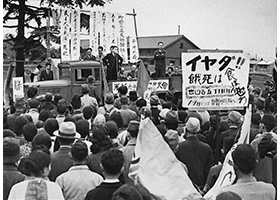
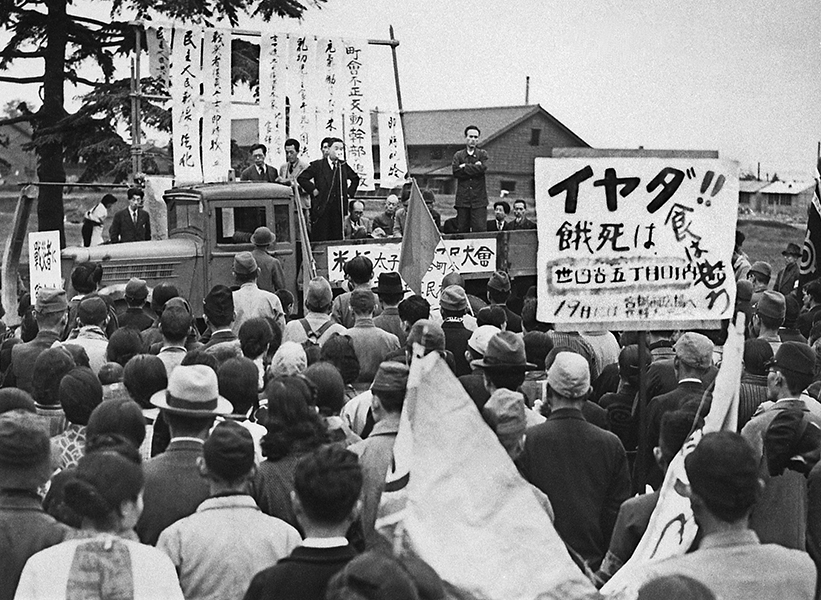
Amid the food shortage, residents of Setagaya gather at a “Give us rice rally”, May 12, 1946. Waving placards bearing the message, “No to starvation!”, the demonstrators raised red flags and set off for the Imperial Palace to make their views known to the Emperor himself.
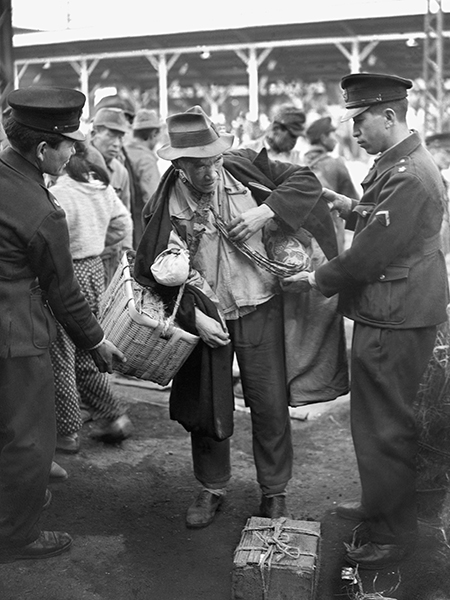
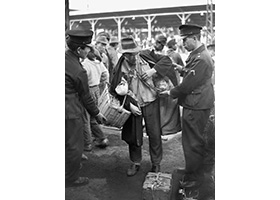
In an unannounced crackdown, a man is investigated for purchase of black market food when Tokyo-bound trains on the Shin-etsu and Joetsu lines are stopped at Omiya Station, Saitama Prefecture, April 15, 1947. He is found to have 15 kilos of white rice, 5.4 liters of sake and 100 eggs. After the war, the food situation is only getting worse and citizens rely heavily on black market goods.
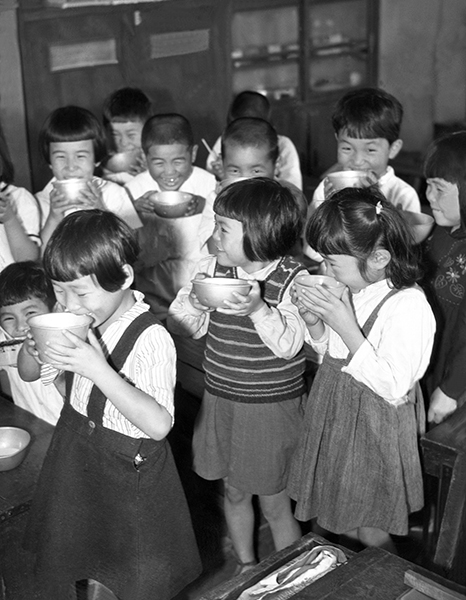
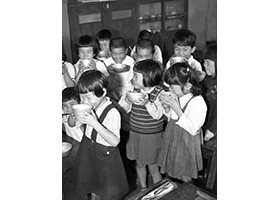
Children of Nagatacho Elementary School, Chiyoda, Tokyo show their delight at UNICEF milk, made by dissolving skimed milk powder, October 17, 1949. UNICEF provided aid to Japanese children suffering from severe malnutrition. Skimed milk powder in large containers was dissolved in large pots and carried to the classroom in buckets. The aid, including medicines and other products, continued for 15 years until 1964.
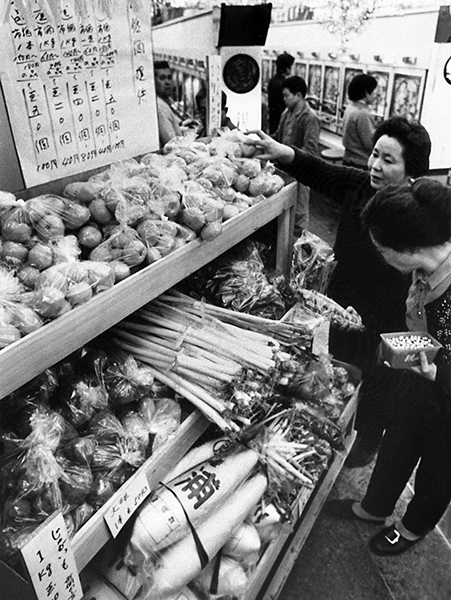
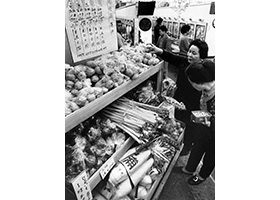
Daikon radishes, potatoes, spring onions and other fresh vegetables are the prizes on display at a pachinko parlor outside Mitaka Station, Tokyo, January 1971. Under the slogan“taking on inflation”, the parlor has shipped in pricey vegetables direct from the producers, giving out one daikon radish (selling for 150-180 yen) in exchange for 50 pachinko balls (100 yen). Housewives could be seen carrying shopping baskets in the evening.
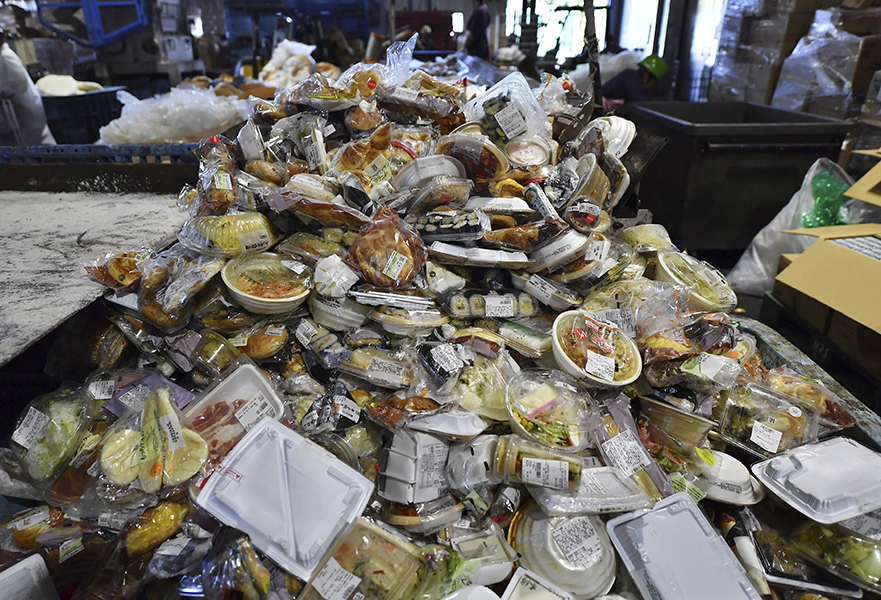
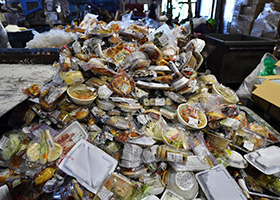
Food waste such as unused convenience store boxed meals is sorted for feed at a pig farm facility in Chiba Prefecture, September 19, 2018. Food waste in Japan was estimated at approximately 4.64 million tons in FY2023 (2.33 million tons from households, 2.31 million tons from businesses). The Ministry of Agriculture, Forestry and Fisheries, the Ministry of the Environment, the Consumer Affairs Agency and others are working together to reduce food loss.
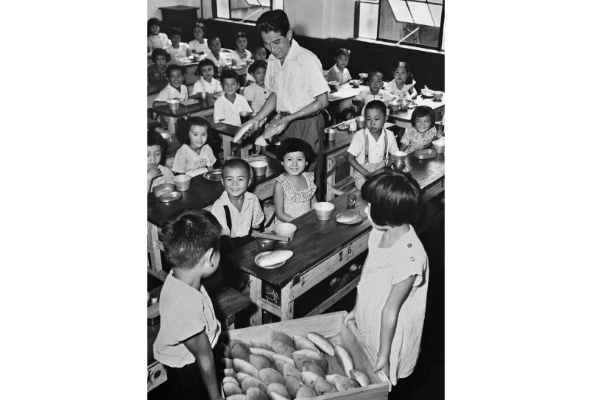
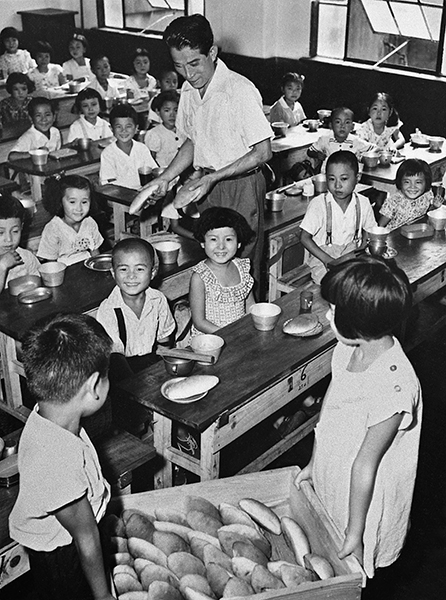
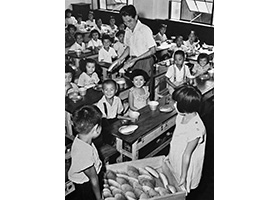
Children of Toka Elementary School are delighted by the launch of “complete school lunches” across Tokyo, September 4, 1950. Complete school lunches, which include a staple food, side dish and milk, were provided in 98.8% of elementary schools and in 89.8% of junior high schools nationwide in the 2023 school year.
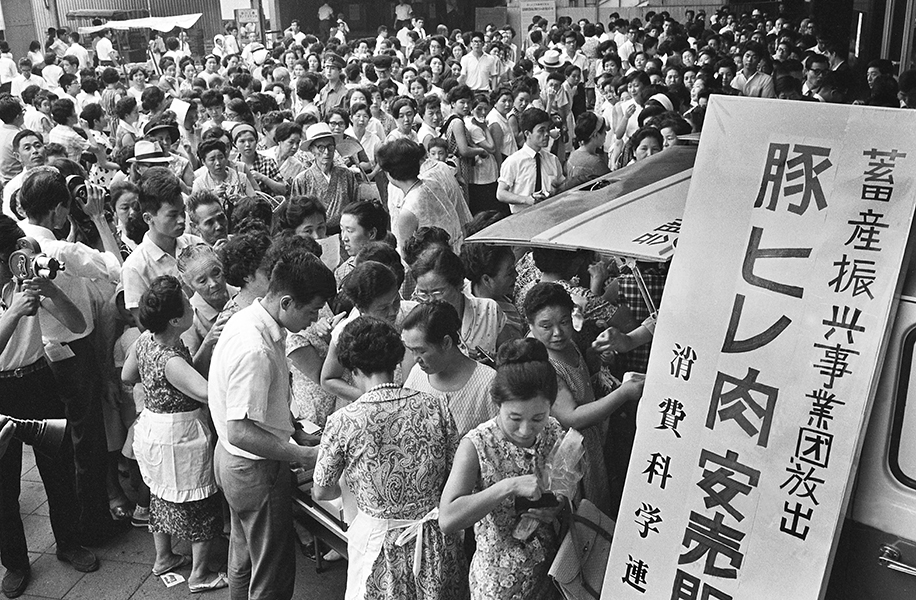
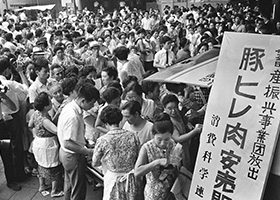
Crowds throng a truck selling pork tenderloin at a discount in Hachiko Square, Shibuya, Tokyo, August 25, 1966. In spite of the economic malaise following the 1964 Tokyo Olympics, consumer inflation was running hot, especially in food and utilities, hitting households in the wallet. The pork was sold at a 25% discount to the market price and one ton of meat sold out in two hours.
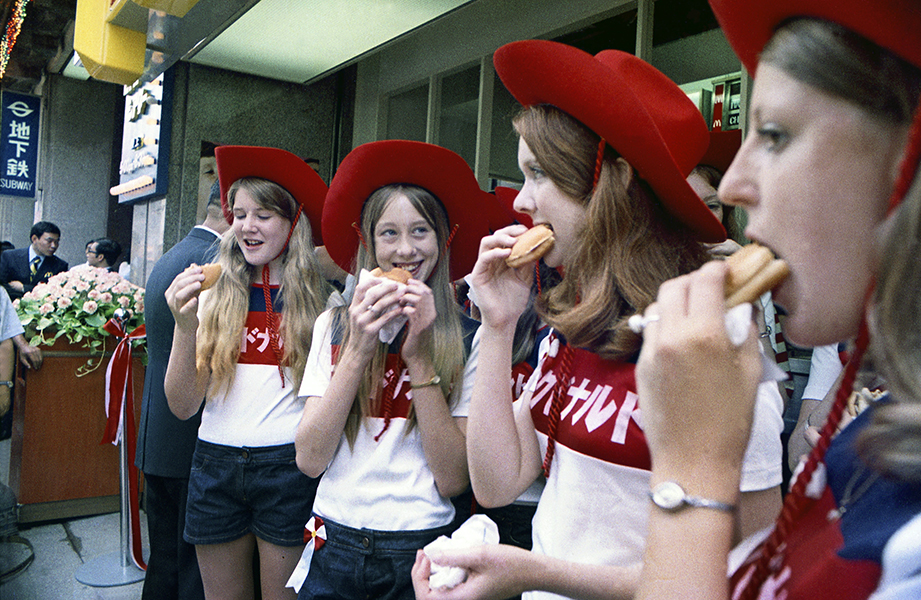
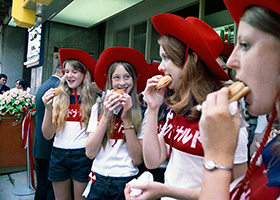
Promotional staff with hamburgers outside the first McDonalds restaurant in Japan at Mitsukoshi Ginza, Tokyo, July 20, 1971. Hamburgers were priced at 80 yen. Mister Donut had already opened its first store in Japan in April 1971, while Kentucky Fried Chicken had launched their first Japanese restaurant in November 1970. The fast-food chains so popular today were rushing into the Japanese market. There are currently some 3,000 McDonalds restaurants in Japan.
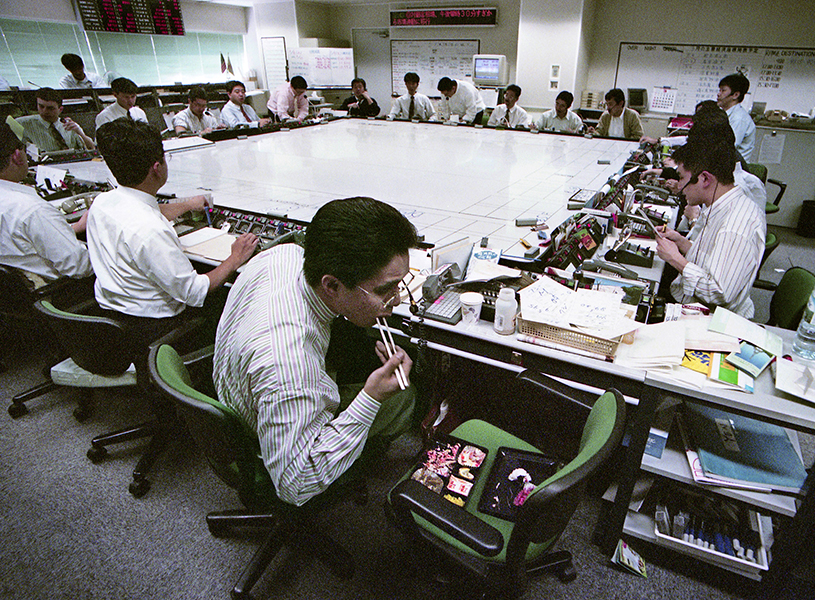
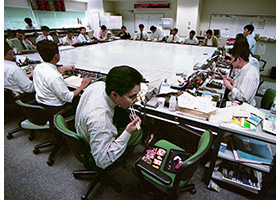
Lively trading continues on the Tokyo Foreign Exchange Market as the yen hits new highs on a daily basis, March 8, 1995. At a foreign exchange brokerage in Chuo Ward, Tokyo, a dealer works through his lunch break, sustained by a bento box meal. On April 19, the exchange rate briefly touched 79.75 yen to the US dollar, the first time in history the dollar dropped below the 80 yen mark on the global market.
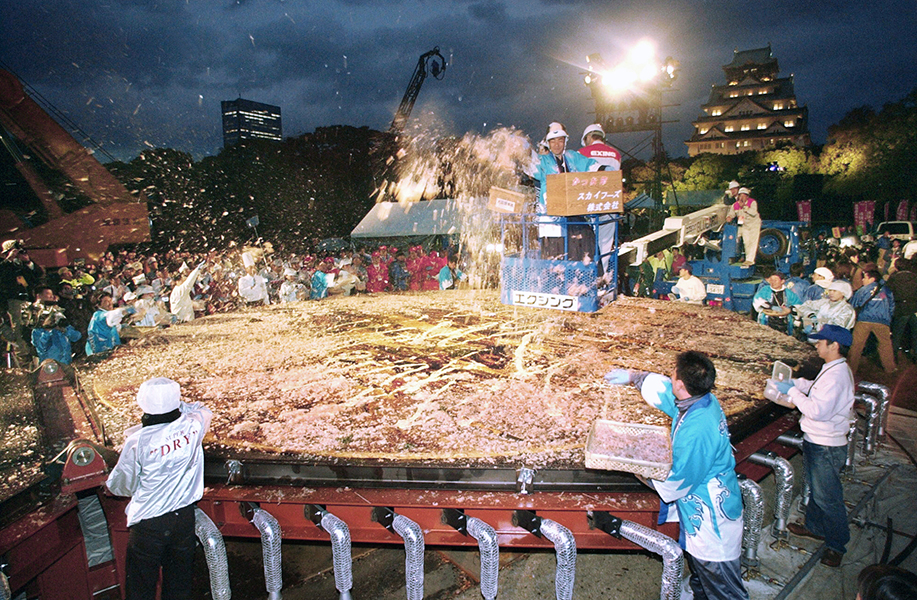
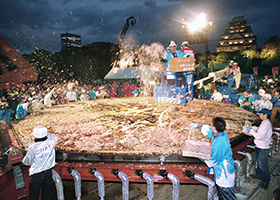
Cooks sprinkle bonito flakes to complete “the world’s biggest okonomiyaki”, Osaka Castle Park, Osaka, November 3, 2002. A group of okonomiyaki businesses calling themselves the “association for flourbased cookery in the Kansai region” set out to achieve a world record and succeeded in cooking a giant okonomiyaki about 8 meters in diameter, weighing approximately 1.6 tons, enough to serve 5,000 people, completing it in about 3.5 hours.
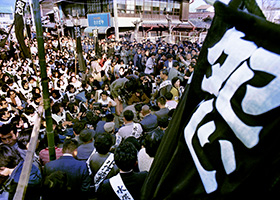
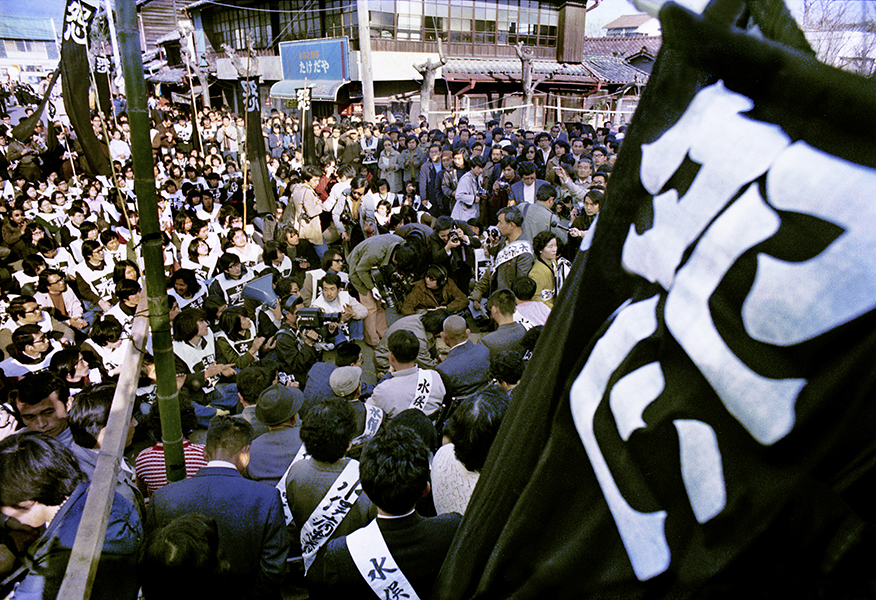
Holding up dyed streamers bearing the character meaning “resentment”, a rally calling for prosecutions over Minamata disease is held outside Kumamoto District Court, March 20, 1973. On this day, the first Minamata disease lawsuit prevailed in the court. Between 1971 and 1973, residents affected by health issues caused by pollution-including Minamata disease, Niigata Minamata disease, Itai-itai disease, and Yokkaichi asthma -- won all lawsuits filed against companies. The rulings severely reprimanded companies for neglecting pollution measures in pursuit of profit, giving impetus to the anti-pollution movement.
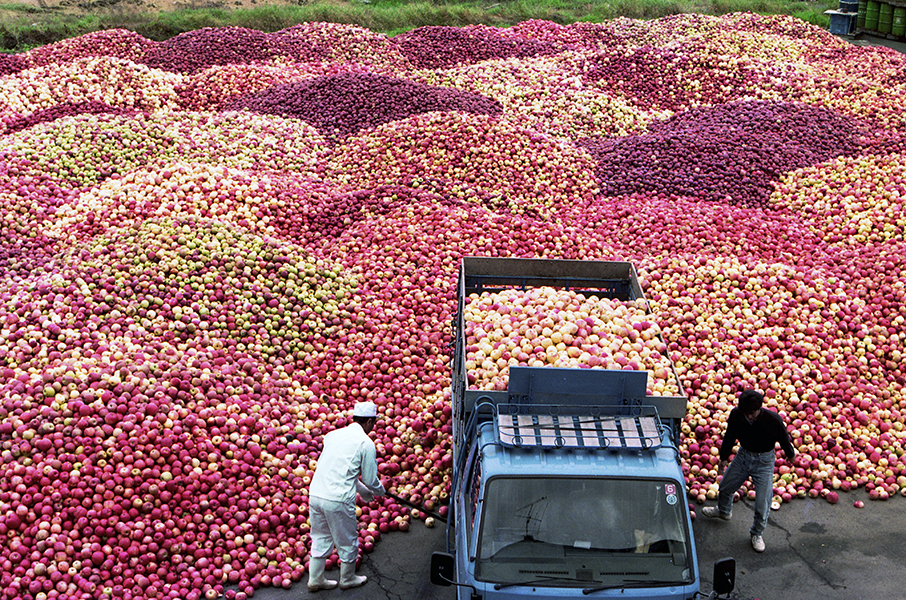
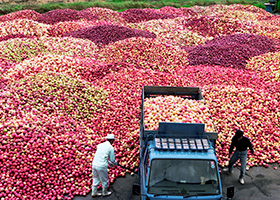
A huge number of apples fallen to the ground in a typhoon being hauled away to a juice processing plant in Hirosaki, Aomori Prefecture, October 1991. Typhoon No. 19 slammed directly into Aomori on September 28. About 70% of the expected harvest of 490,000 tons, half of the national apple production, was blown off trees in the typhoon, causing losses of 74 billion yen. Some of the crop was sold cheaply on the market, but the majority had to be disposed of.
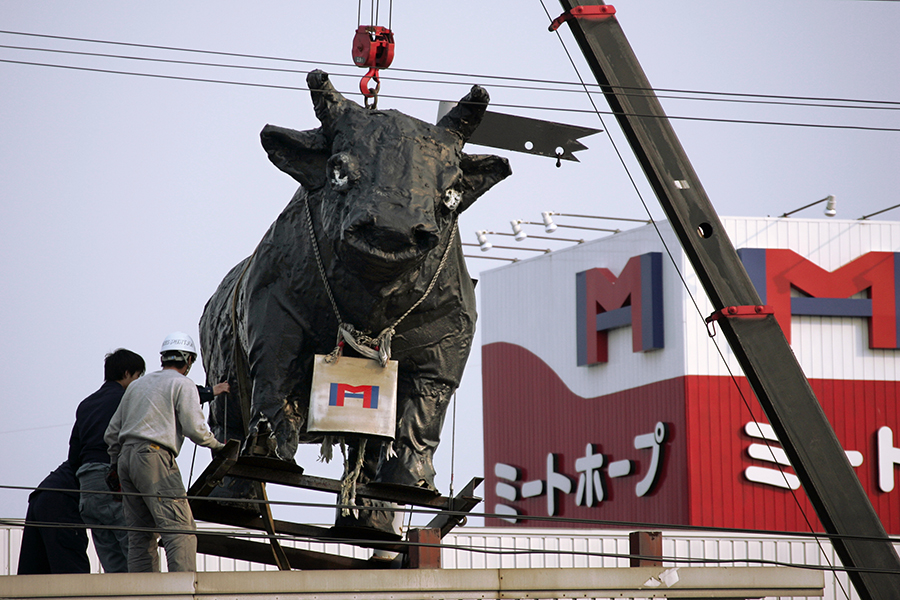
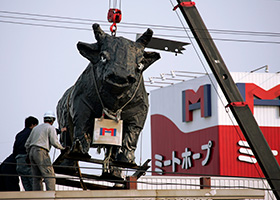
The statue of a cow is removed from the roof of the Meat Hope Inc. headquarters, a meat processing and wholesaling company based in Tomakomai, Hokkaido, during bankruptcy proceedings due to a ground beef fraud scandal, May 22, 2008. The statue on the roof was a symbol of the company. It was revealed that the minced meat it was labelling “100% beef” was in fact mixed with pork and other ingredients. The former president of the firm was sentenced to jail for fraud and breach of the Unfair Competition Prevention Law (false labeling).
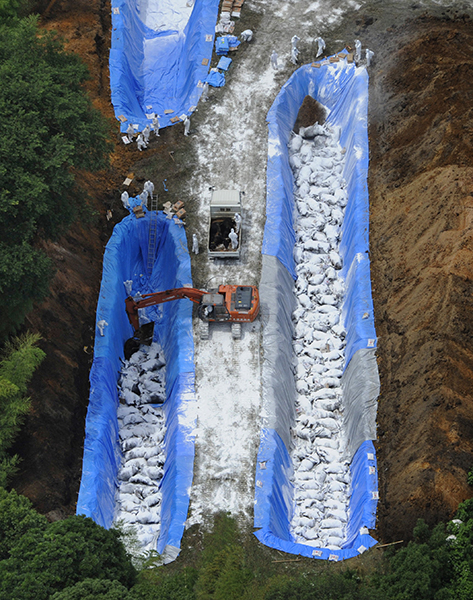
Cattle slaughtered and buried in foot-and-mouth outbreak
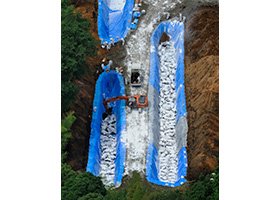
A total of 208 cattle were slaughtered and buried on a farm in Miyazaki Prefecture after a foot-and-mouth diseases outbreak is confirmed, June 10, 2010. The highly infectious virus affects cattle, pigs, sheep and other livestock. After cattle suspected of foot-and-mouth were confirmed to be infected in Miyazaki Prefecture in April 2010, the infection spread to five cities and six towns. A total of 298,000 cattle, pigs and other animals were slaughtered.
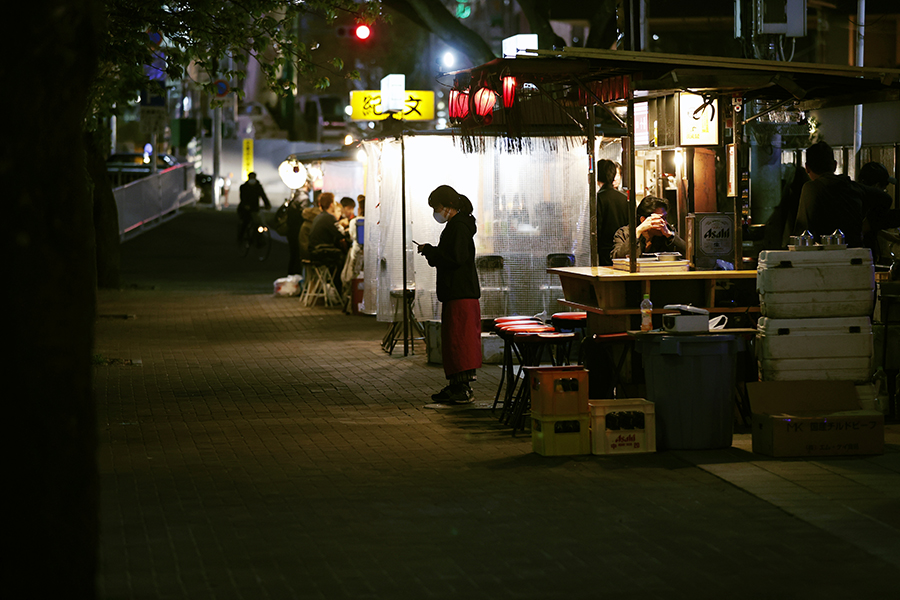
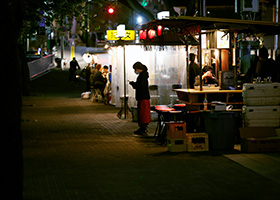
Food stalls in the typically bustling nightlife district of Nakasu, Fukuoka City are deserted as COVID-19 takes hold, April 7, 2020. This was the day the government declared a state of emergency to prevent further spread of the novel coronavirus disease. States of emergency were repeatedly declared and lifted until September 2021. Establishments serving alcohol were requested to close, delivering a major blow to the tourism industry and other sectors.
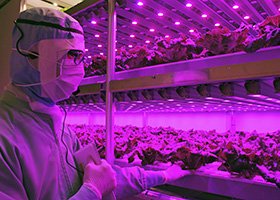
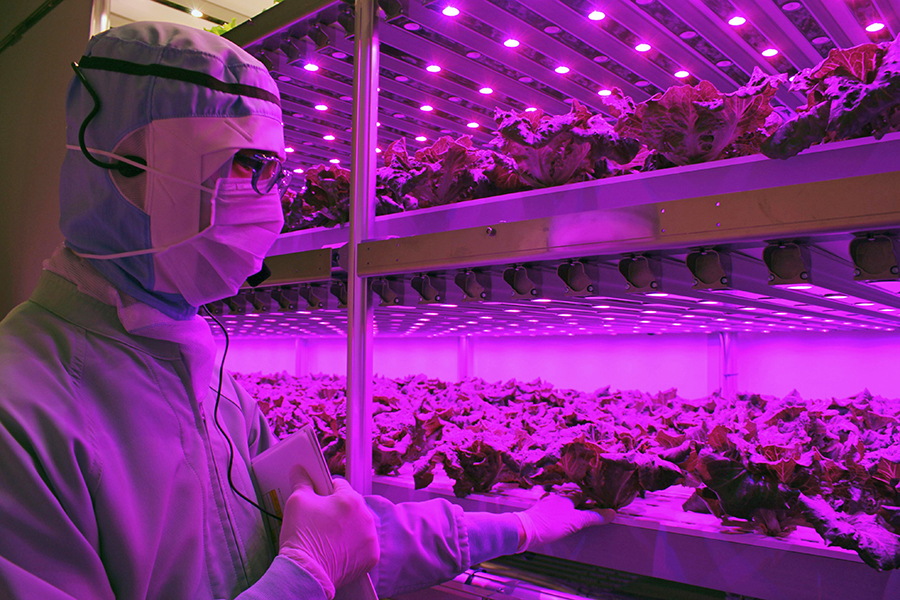
A lettuce factory growing for 7-Eleven and other convenience store chains is opened to the public in Sagamihara City, November 28, 2018. While 70 days are normally required until harvest when growing outdoors, lettuce can be cultivated in just 38 days in the factory. Stable supply is assured because the crops are not reliant on the weather. Violet light is also applied to stimulate the production of vitamin C.
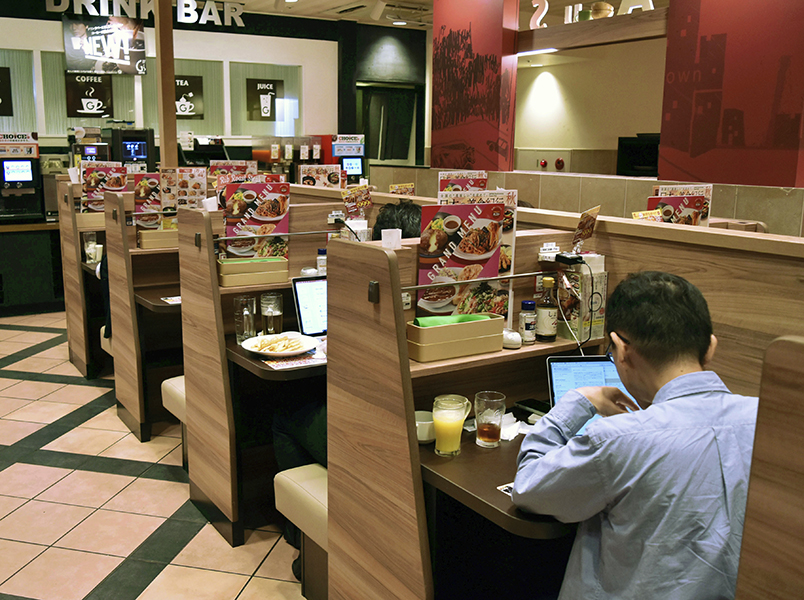
Box seats for individual diners in a Tokyo family restaurant, September 17, 2019. The seats are designed to provide a private space and feature power outlets and free Wi-Fi, aiming to attract business customers, male and female.
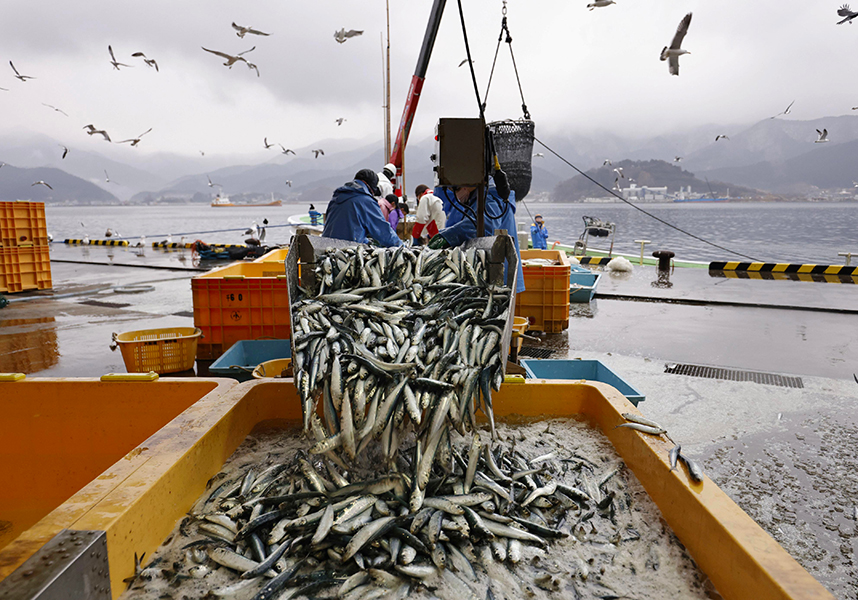
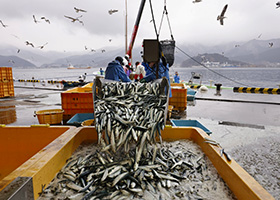
Pacific sardines being unloaded at the Ofunato fish market in Iwate Prefecture, February 13, 2023. Sardines have been caught in large numbers off Iwate in recent years. Spiny lobster catches have also been rising in Fukushima and Ibaraki prefectures, and across Japan the fishing grounds for fish that prefer warmer waters are shifting northward.
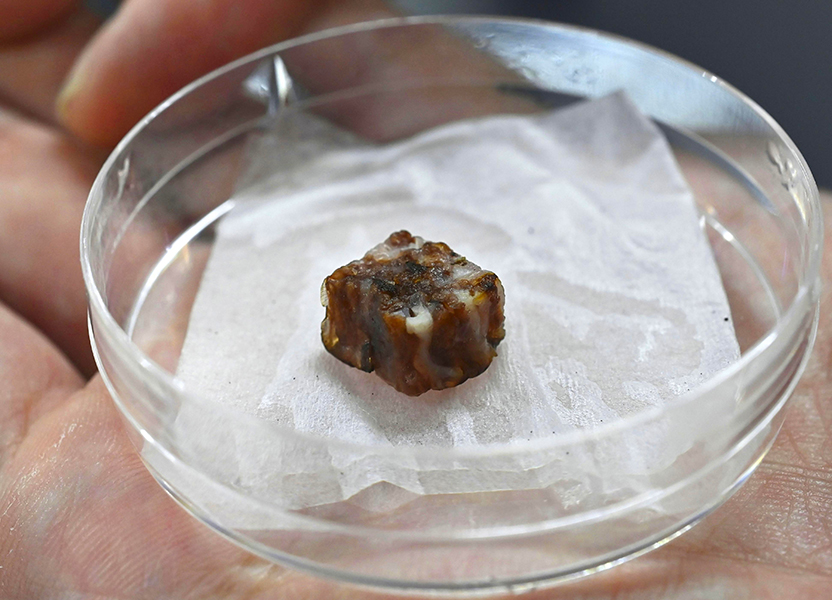
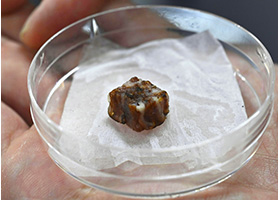
Meat cultivated in an automated production facility, March 5, 2024. Osaka University and a corporate consortium in Osaka Prefecture are continuing research aimed at putting cultured meat into practical use. Other alternative meats include plant-based meats and fermentation-based meat made using microorganisms.
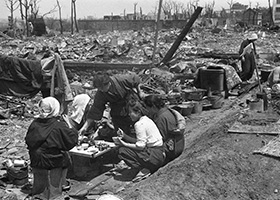
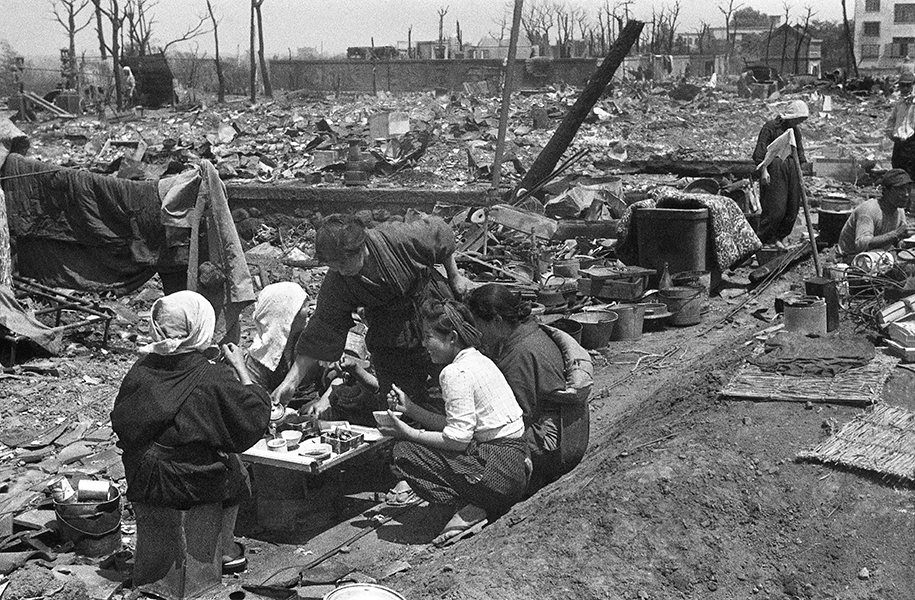
At the end of the Pacific War, a group shares a meal peacefully amid the burned-out wasteland left after the US air raids, May 27, 1945. Air raids continued even after the Great Tokyo Air Raid of March 10. On the night of May 25, wide-ranging bombing focused on the Yamanote area left large areas in ruins, claiming over 3,000 lives. (Domei News Agency)
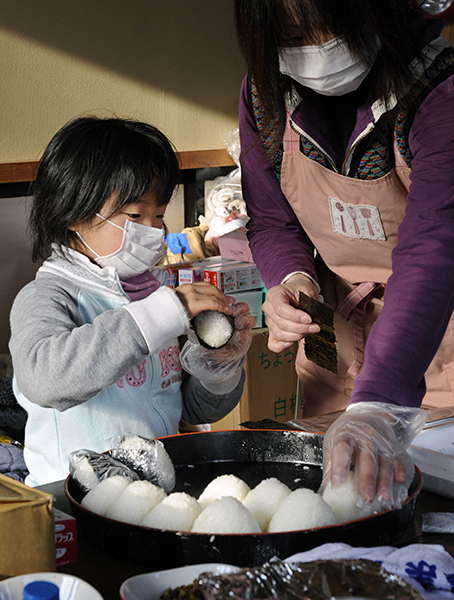
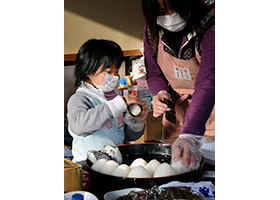
A girl and her mother make rice balls together in an evacuation shelter in Ofunato City, Iwate Prefecture in the wake of the devastating Great East Japan Earthquake disaster, March 17, 2011. The filling is umeboshi (pickled plum) donated by a local resident. The two shape hundreds of rice balls, saying, “let’s do our best to make these for everyone, because they have no food.”
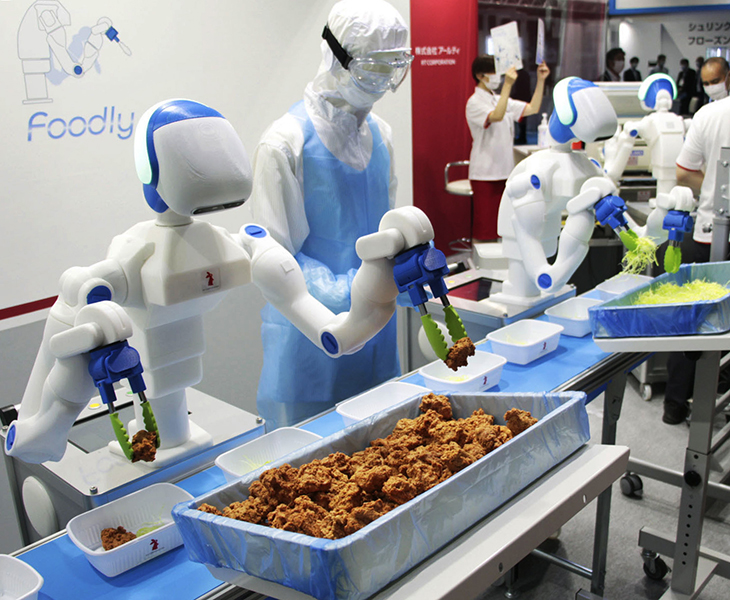
A humanoid robot powered by AI packs ingredients into a bento box including hard-to-handle finely chopped cabbage and karaage (fried chicken) at a food processing technology exhibition in Tokoname City, Aichi Prefecture, June 1, 2021. The robot is expected to help address workforce shortages in the food processing industry.
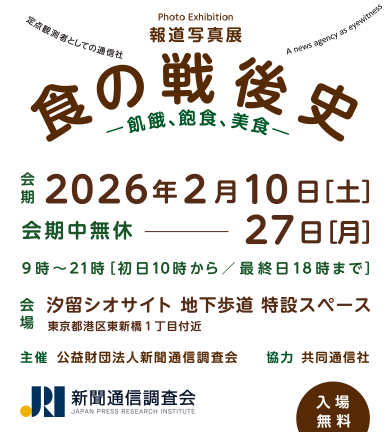
![会期:2025年1月11日(土)~9月27日(月)9:00~21:00[初日10:00から/最終日18:00まで]/会期中無休/会場:東京国際フォーラム ロビーギャラリー 東京都千代田区丸の内3-5-1 主催:公益財団法人新聞通信調査会/協力:共同通信社](./_assets/img/header/date-venue-pc.svg)